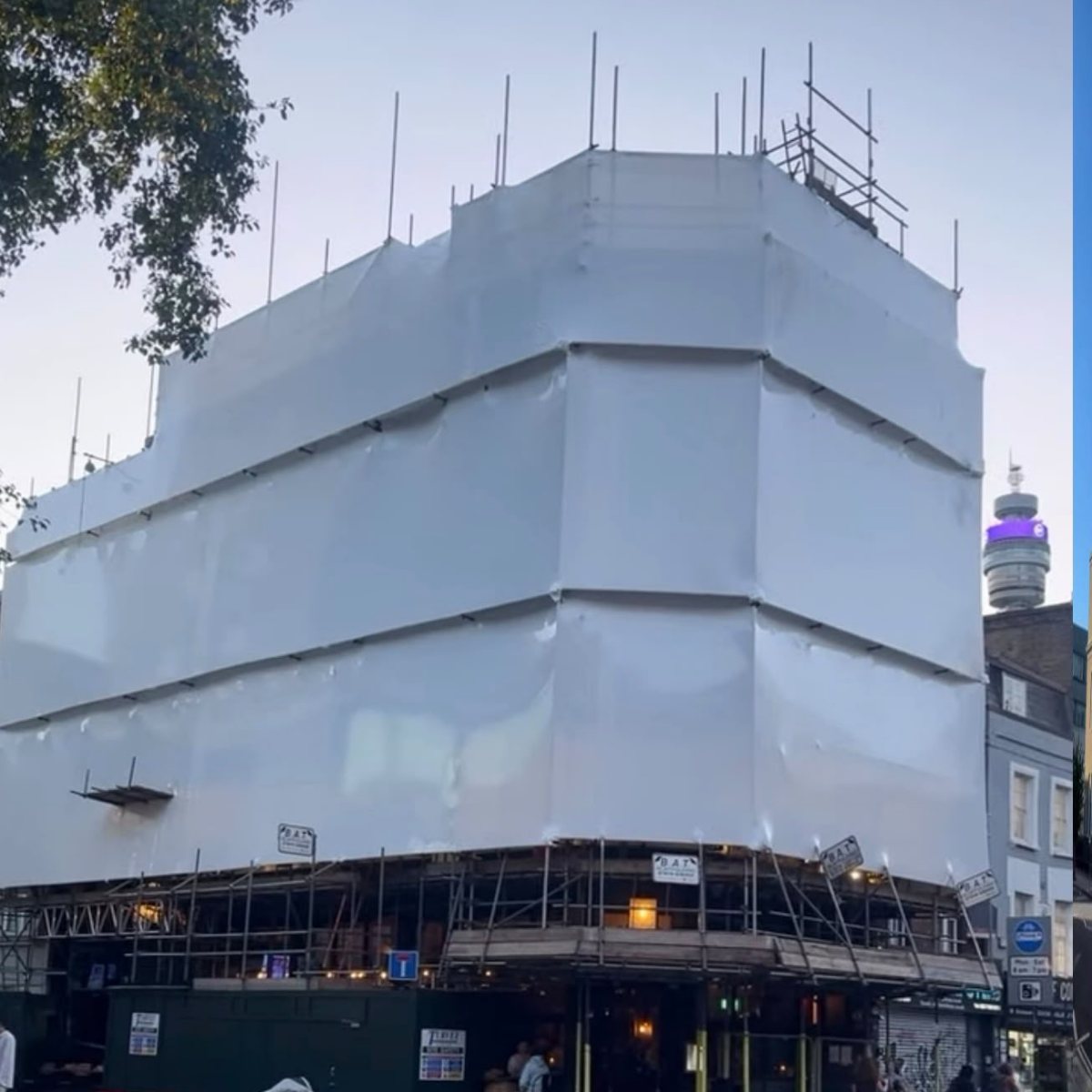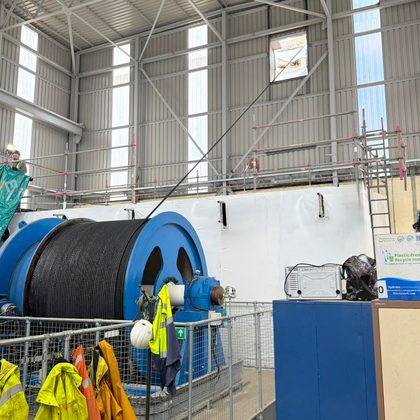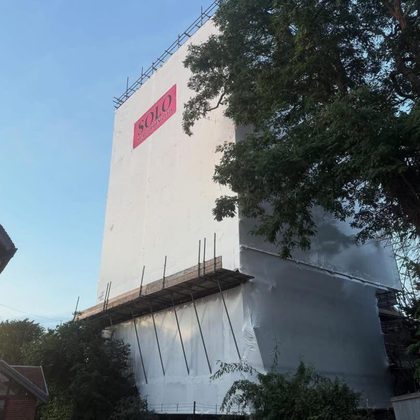
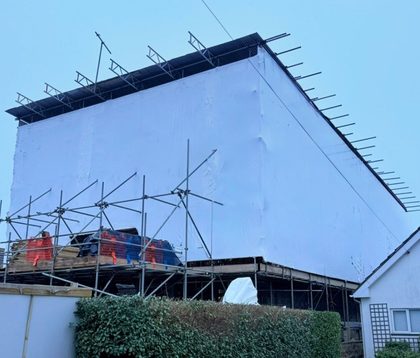
Taking a roof off in a British autumn is a gamble unless what replaces it is genuinely sealed.
A temporary roof is the point where weather protection stops being a nice-to-have. Once the existing roof is open, everything below it — joists, ceilings, plaster, floors, and often the people living there — depends entirely on what you have put over the top.
How a shrink wrapped roof is built
A beam system spans the structure, supported off the scaffold and designed for the span and the loading. Film is then hung over the beams, heat-welded into one continuous membrane and shrunk tight so it sits taut between them. What you end up with is a sealed skin rather than a set of overlapping sheets held down by hope.
Why sheeting struggles on a roof
On an elevation, a lap that leaks is a nuisance. On a roof it is directly above the work. Water finds laps, wind lifts them, and a roof is where wind loading is highest and where a failure does the most damage. Sheeting also drums in wind, which is unpleasant enough on an elevation and genuinely disruptive above an occupied building.
Wind loading is the real design question
A wrapped roof is a large, sealed, tensioned surface, and it will collect wind in a way an open scaffold never does. The beam system and the supporting scaffold have to be designed for that, including uplift. This is not a detail to resolve on site — it is a design question to settle before anyone mobilises.
Where they are used
- Re-roofing on occupied houses, where the residents stay in through the works
- Structural and fire damage reinstatement, where the building has to dry out before repair
- Heritage and listed roof works with long programmes and lime or lead detailing
- Commercial re-roofing where the trading floor below cannot stop
- Emergency covering after storm or fire damage
What to specify
- Heavier gauge film than an elevation would use — roofs take more punishment
- Flame-retardant grade where hot works are involved, which on lead and felt work is most of the time
- Designed rainwater discharge, so the roof sheds to somewhere sensible rather than down the elevation
- Access hatches and material routes designed in at survey
- Clear vision panels where the working area needs daylight
How long they last
A properly built shrink wrapped roof will hold for the length of a normal refurbishment programme and well beyond — several months to over a year depending on exposure and gauge. What kills them is not time but poor detailing at the perimeter, which is exactly where the survey should be spending its attention.
Talk to us about your project
We install scaffold shrink wrap from our Isle of Wight base and travel across the UK every week. Every quote is fixed after survey, with removal and disposal priced in from the start.