Sheeting is cheaper on day one. Whether it is cheaper by month three depends on how many times someone goes back up.
There are three realistic ways to clad a scaffold in the UK: debris netting, sheeting such as monarflex, or shrink wrap. They are not interchangeable, and the right answer depends on what you actually need the cladding to do.
Debris netting
Netting contains debris and lets air through. That is the whole job. It does not keep weather out, it does not contain dust and it will not let a trade work in the dry. Where debris containment and airflow are all you need, it is the correct and cheapest answer — and specifying anything heavier is wasted money.
Sheeting
Sheeting is fixed in overlapping panels tied to the frame. It keeps most of the rain off most of the time. The problems are structural to the method rather than to the product: every lap is a route in for wind and water, every eyelet is a failure point, and the whole thing moves in wind.
In practice that means re-sheeting visits after storms, water finding its way onto stripped roofs, and — on any residential or high street job — complaints about noise. Flapping sheeting at night is the single most common source of neighbour complaints on an occupied site.
Shrink wrap
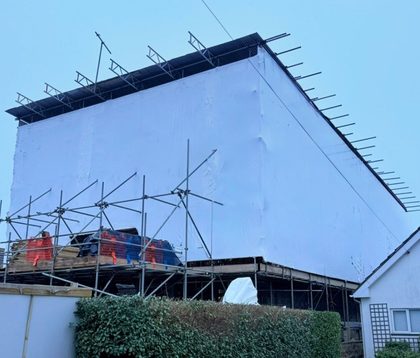
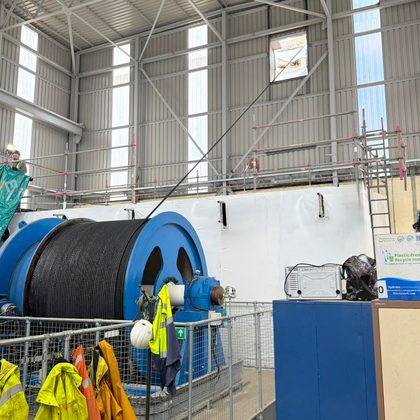
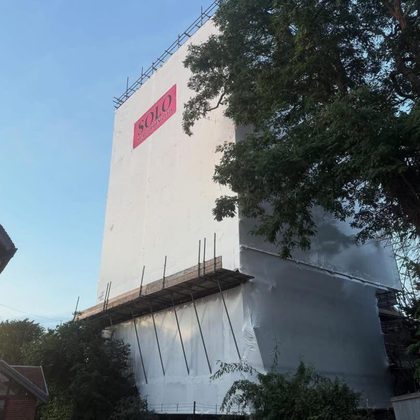
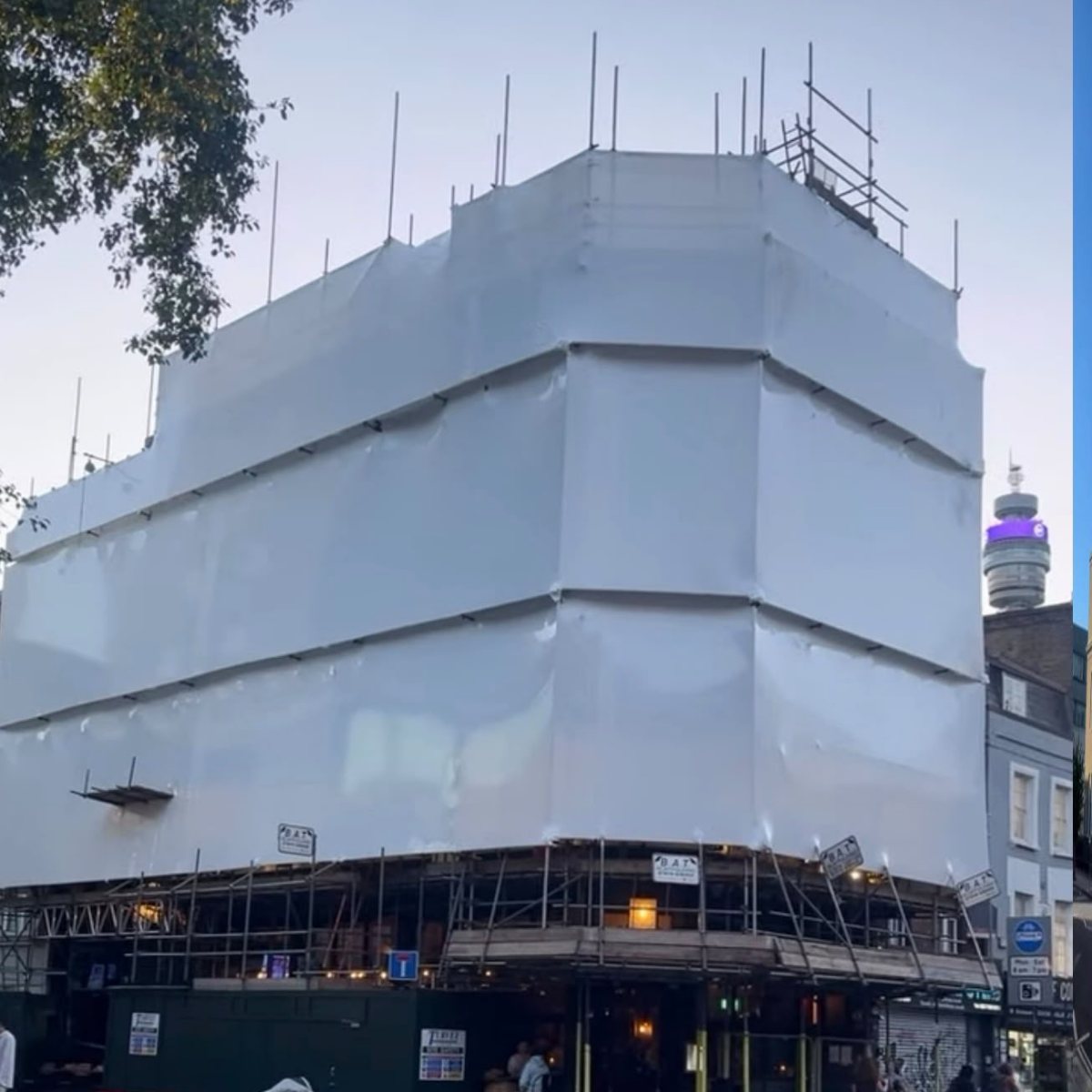
Shrink wrap is hung as panels, heat-welded panel to panel, then shrunk tight onto the frame. The result is one continuous membrane under tension. No laps, no eyelets, no ropes, nothing loose. It stays put through a winter without remedial visits, it is dramatically quieter, and it presents as a finished job from the street.
The comparison that matters
- Weather protection: netting none, sheeting partial, shrink wrap sealed
- Dust and debris containment: netting debris only, sheeting partial, shrink wrap sealed
- Wind behaviour: netting passes air, sheeting flaps, shrink wrap drum tight
- Noise: netting quiet, sheeting loud, shrink wrap quiet
- Remedial visits: netting occasional, sheeting frequent, shrink wrap rare
- Appearance: netting poor, sheeting tired within weeks, shrink wrap clean white
- Day one cost: netting lowest, sheeting low, shrink wrap highest
Where shrink wrap pays for itself
It is not the cheapest option on day one and it is dishonest to pretend otherwise. It becomes the cheapest option when any of the following are true:
- The programme runs through winter and lost weeks cost more than the cladding
- Internal trades need to work in the dry regardless of forecast
- The building is occupied, or neighbours are close enough to complain
- Dust or overspray must not leave the site boundary
- The elevation is exposed and sheeting would need repeated attention
- The building is listed or in a conservation area and appearance is scrutinised
Fire performance
Flame-retardant grades are available in both sheeting and shrink wrap, and on occupied buildings or where hot works are taking place nearby the fire strategy will usually demand them. Ask for the grade in writing with the quote and certification at handover — not a verbal assurance on site.
One thing to check before you specify
A wrapped scaffold takes considerably more wind loading than an open or netted one. Ties, bracing and the design itself must account for it. Confirm the structure is designed and tagged for a wrapped load before anyone starts, because retro-fitting ties after the wrap is on is an expensive way to learn this.
Talk to us about your project
We install scaffold shrink wrap from our Isle of Wight base and travel across the UK every week. Every quote is fixed after survey, with removal and disposal priced in from the start.