
In one paragraph
What is boat shrink wrapping?
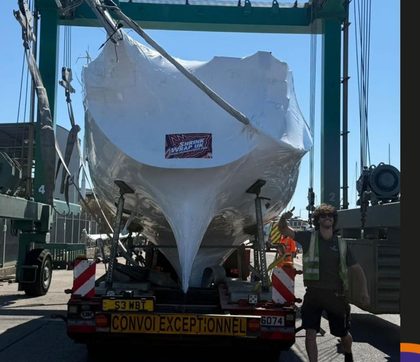
Boat shrink wrapping is a fitted cover made from heavy polythene film, laid over a frame built on the boat, heat-welded into one skin and heated until it shrinks tight. Done properly it sheds water clear of the topsides, keeps UV and salt off, and is vented so the hull can breathe.
- Also called
- Boat covers, winter boat covers, yacht shrink wrap
- Typical film
- 200–250 micron, UV-stabilised
- Main use
- Winter lay-up, refit, road and sea transport
- When to book
- September, before the October lift-outs
- Main alternative
- Canvas covers, tarpaulins
- After use
- Removed in spring and recycled
The benefits of boat shrink wrapping
Most of what makes it worth specifying comes down to one thing: it is a single sealed, tensioned skin rather than a set of loose panels. Everything below follows from that.
Water sheds, not ponds
Built over a ridge frame, the cover slopes water clear of the boat instead of pooling in low spots where it freezes and stretches the film.
Nothing to flog
Shrunk tight, it has no loose edges to chafe gelcoat or work free in a gale.
Breathes properly
Vents at high and low points, sized to the envelope, stop the condensation that causes mildew and staining.
Board through winter
A zipped door lets you get aboard without cutting the cover and taping it back up.
Road and sea safe
Covers do not lift at motorway speed or on an open deck, and keep salt spray and stone chip off.
Nothing to store
No canvas to dry, fold, repair and keep somewhere for eight months.
When to use boat shrink wrapping — and when not to
It is not the right answer for every job, and an installer who tells you otherwise is selling rather than advising.
Use it when
- The boat is going ashore for winter lay-up
- It is moving by road, low loader, ferry or container
- It is in for refit and the yard needs it dry for months
- It sits exposed on a hard standing with no shelter
- It is a timber boat that needs controlled ventilation
Skip it when
- The boat is in daily use and you need to board constantly
- You already own a good fitted canvas cover that is in sound condition
- The boat is stored indoors in a dry, ventilated shed
How boat shrink wrapping is installed, step by step
This is the part that separates a cover that lasts from one that fails in its first storm. Each step exists for a reason, and the reason is given with it.
Survey the boat
Length, beam, rig, arches, davits and radar posts are noted. On sailing yachts, whether the mast stays stepped changes the whole job.
Pad and protect
Every point where the frame or film could contact the boat is padded — stanchions, pulpits, sharp fittings — so nothing chafes gelcoat or brightwork.
Build the frame
Timber battens or webbing run fore and aft over a ridge line, set so every surface slopes and sheds water. This is often most of the job.
Fit the belly band
A strap runs round the hull below the rubbing strake. The film tucks under it so the cover grips the boat without being fixed to it.
Drape and weld
Film is draped over the frame and heat-welded into one piece, overlapping at every seam.
Shrink
The film is heated evenly from the belly band upward until it pulls tight over the frame and around the hull.
Fit vents and a door
Vents go in at the high and low points, sized to the envelope. A zipped access door goes where you will board.
Check and hand over
Every seam and fitting is checked, and any nicks are patched with shrink tape.
Boat shrink wrapping versus the alternatives
The honest comparison, including where the cheaper option is the right one.
| Shrink wrap | Canvas cover | Tarpaulin | |
|---|---|---|---|
| Fit | Made to the boat | Made to the boat | Generic |
| Sheds water | Yes, over a frame | Yes if well made | Ponds |
| Ventilation | Designed in | Built in | None |
| Wind behaviour | Drum tight | Good | Flogs, chafes |
| Transport safe | Yes | Rarely | No |
| Storage between seasons | None | Needs drying and storing | Needs storing |
| Up-front cost | Per season | High, lasts years | Lowest |
Boat shrink wrapping specification
What a proper specification should cover. If a quote does not mention these, ask.
| Film gauge | 200–250 micron on most boats; heavier on exposed hard standings |
|---|---|
| UV stability | UV-stabilised film as standard for outdoor lay-up |
| Frame | Timber battens or webbing over a ridge; padded at every contact point |
| Ventilation | Vents at high and low points, sized to the envelope volume |
| Access | Zipped door where you board; more on larger vessels |
| Timber hulls | Ventilation designed more generously — a sealed wooden boat suffers |
| Transport | Lashing points and lifting eyes kept clear |
How much does boat shrink wrapping cost?
There is no honest rate per square metre, because film is the cheapest part of the job. These are the things that actually move the price.
A quote worth trusting is fixed after survey, with removal priced in from the start and travel shown as its own line. If it says “subject to access”, it is not a price.
Before you call an installer
Have these to hand and you will get a realistic figure on the first call rather than the third.
- Boat length, make and model
- Whether the mast will be stepped or unstepped
- Where the boat is lying and the lift date
- Whether you want to board during the winter
- Anything unusual — arches, davits, a tender on the transom
- Whether it is going into storage, transport or refit
Boat shrink wrapping glossary
- Belly band
- A strap round the hull that the film tucks under, holding the cover without fixing to the boat.
- Lay-up
- Taking a boat out of use for the winter.
- Hard standing
- The yard area where boats are stored ashore on cradles or stands.
- Ridge line
- The high line along the frame that water sheds away from.
- Stepped rig
- A mast left up over winter rather than removed.
- Gelcoat
- The glossy outer layer of a GRP hull, easily chafed.
Boat shrink wrapping FAQs
How long does boat shrink wrap last?
It is designed to see out a full winter lay-up and comes off in spring. A well-framed, well-vented cover handles a British winter comfortably; heavier film is used on exposed berths.
Does shrink wrap damage a boat?
Not when it is done properly. The film is shrunk onto a padded frame, not onto the boat, so nothing bears on gelcoat or brightwork. The mildew people associate with covers is a ventilation failure, not a film problem.
Can I get on my boat once it is shrink wrapped?
Yes, if a zipped access door is fitted. Ask for one at survey so you are not cutting the cover open later.
When should I book boat shrink wrapping?
September. Yards fill from the first week of October, and a cover wants to be on before the first proper gale.
Can a wooden boat be shrink wrapped?
Yes, but ventilation matters more than on GRP. A timber hull sealed tight without designed airflow will suffer over a winter.
Is shrink wrap safe for transporting a boat?
Yes, and it is one of the best uses for it. A shrunk cover has no loose edge for airflow to lift at road speed or on an open deck.
Why Shrink Wrap UK
Specialist installers, not a film seller
We do not sell film by the roll or run training courses. We install. Every word in this guide comes from doing the job, and if shrink wrap is the wrong answer for yours, we will tell you.
- Fixed price after survey
- Removal and disposal priced in
- RAMS supplied as standard
- Film certification at handover
- Isle of Wight base, crews UK-wide
- Same working day response