Shrink wrap is a heavy plastic film that is fitted loosely over an object or a frame, then heated so it shrinks and pulls tight into one continuous, weatherproof skin. It is used to protect scaffolding, boats, machinery, loads and aircraft from rain, wind, dust and UV for weeks or months at a time.
Most people know shrink wrap as the thin film around a multipack of bottles. The protective kind we install is a different product: much thicker, UV-stabilised and fitted by hand on site, often over a frame built for the job.
How shrink wrap works
The film is made so that it contracts when heated. An installer drapes it over the structure, fixes it at the base and then works over it with a heat gun. As the film warms it shrinks and draws tight against the frame, the same way a drum skin is tensioned.
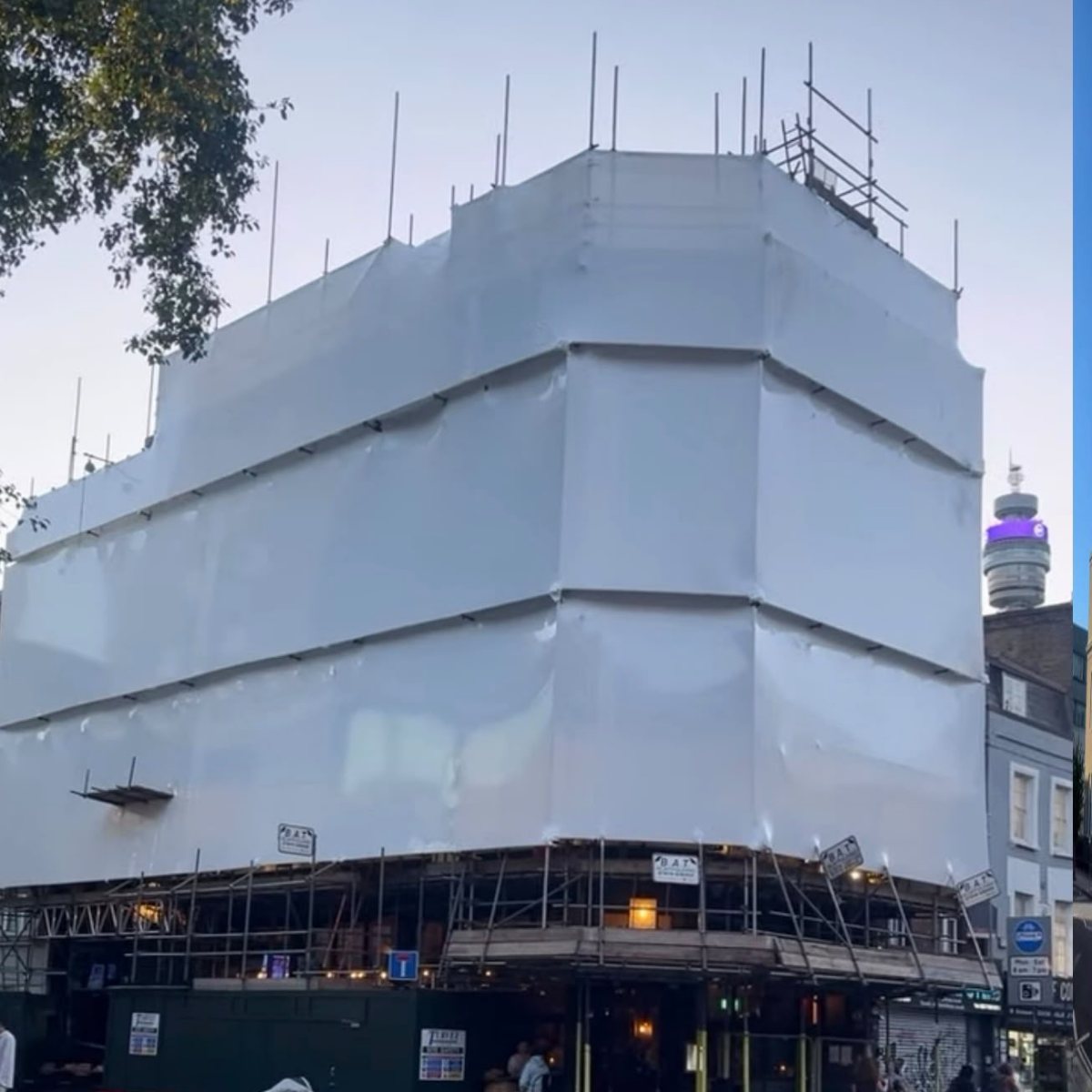
Where two sheets meet, the edges are heat-welded together, so the finished cover has no laps for wind to get under. That is the main difference from sheeting or a tarpaulin: there is nothing loose to flap, work free or let water in at the joins.
- Survey and frame. The job is measured and, where needed, a frame is built so the film sheds water instead of pooling.
- Fit the film. Film is cut to size, draped over and fixed along a perimeter band or skirt.
- Weld and shrink. Seams are welded and the whole cover is shrunk tight with heat.
- Vents, doors and hatches. Vents go in at the high and low points to control condensation, with zipped doors wherever people need to get in.
What shrink wrap is made of
Protective shrink wrap is polyethylene film with UV inhibitors added so it holds up outdoors. It is much thicker than packaging film: around 200 to 250 microns is typical for boats and 250 to 300 microns for scaffold elevations. White is the most common colour because it reflects heat and keeps the inside cooler, while blue and clear film are used where colour or light matters.
A flame-retardant grade is also made. It is usually required on occupied buildings, near hot works and wherever a fire strategy or insurer calls for it. Our guide to fire-retardant shrink wrap covers what to ask for.
What shrink wrap is used for
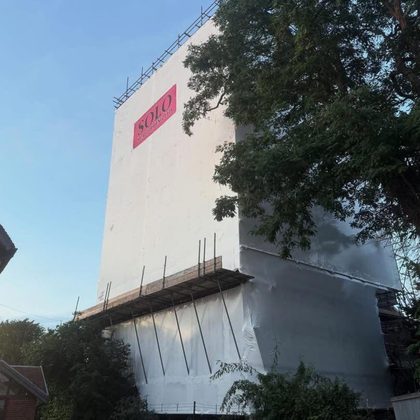
- Scaffolding: full encapsulation and temporary roofs that keep a building dry and contain dust during works.
- Boats and yachts: framed, vented winter covers, refit containment and transport covers.
- Industrial plant: machinery and high-value assets sealed for storage, shutdowns and relocation.
- Transport: abnormal loads, vehicles and freight protected from road grime, salt and weather.
- Aircraft: airframes, engines and components covered for storage and ferry flights.
Is it the same as packaging shrink wrap?
No. Packaging film, like the wrap on bottles or pallets, is thin and applied by machine in a factory. Protective shrink wrap is many times thicker, UV-stabilised and fitted by hand on site. If you are looking for shrink wrapping machinery or film for packaging products, that is a different trade from ours.
Shrink wrap or sheeting and tarpaulins?
Sheeting and tarpaulins go on in overlapping panels held with ties, so they flap, wear at the fixings and let water in at the laps. Shrink wrap is one welded, tensioned skin, so it stays quiet and tight for the life of the job. It costs more to fit than basic sheeting, but it rarely needs going back to. Our comparison of shrink wrap and scaffold sheeting goes into the detail.
How long does shrink wrap last?
Anything from several months to well over a year, depending on exposure, film gauge and how the frame is set out. A properly framed and vented boat cover comfortably sees out a UK winter, and a scaffold wrap is specified for the length of the programme.
What happens to it afterwards?
The cover is cut away at the end of the job and the film is removed clean. Polyethylene film can be recycled, and we segregate it for recycling wherever a local route is available. Removal and disposal are priced into our quote from the start.
How much does shrink wrap cost?
It depends on the size and shape of what is being covered, how much framing it needs, the film grade and access. That is why we survey first and give a fixed price. Our UK shrink wrap cost guide explains what moves the number.
Talk to us about your project
We are shrink wrap specialists based on the Isle of Wight, with crews working across the UK. Send a photo and rough dimensions and we will tell you what is involved, including when shrink wrap is not the right call.